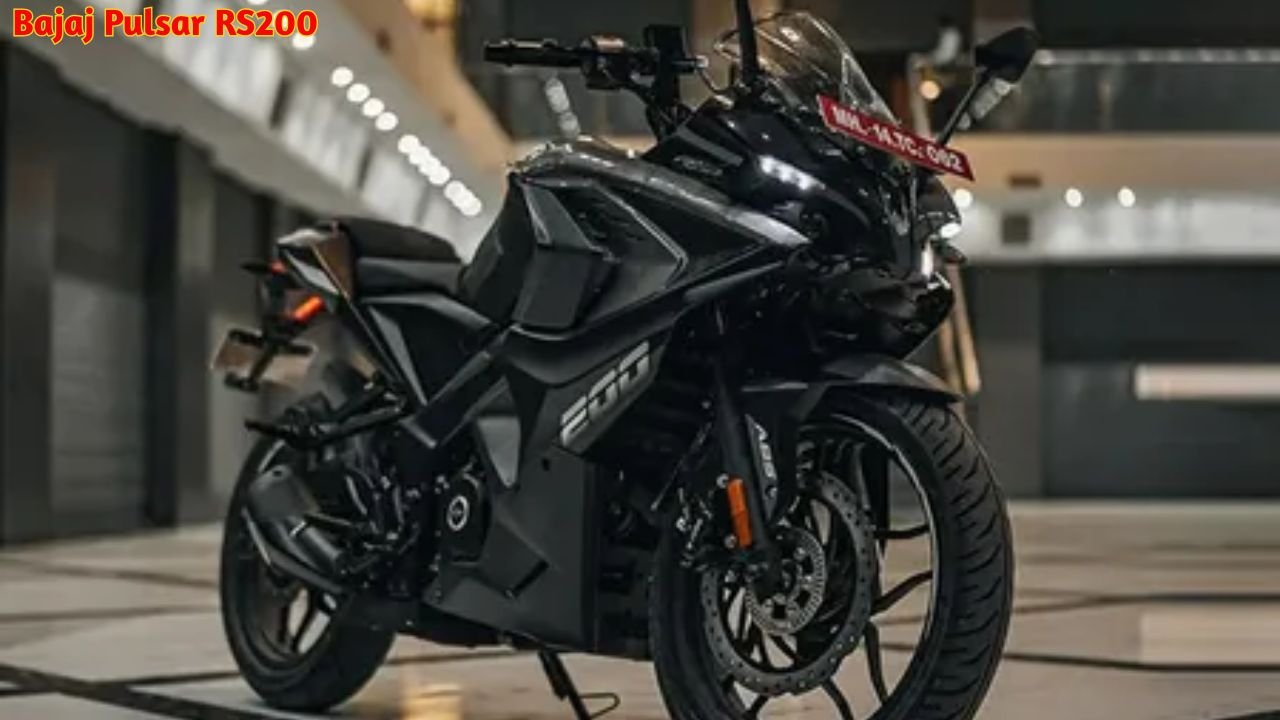
The much-rumored Bajaj Pulsar RS200 has created excitement in the biking community with its latest launch, supposedly offering a mindboggling mileage of 60 KMPL, along with advanced ABS, dual-channel ABS and a number of loaded features, all packaged with a very low price tag.
If these rumours are true, this new RS200 could potentially rewrite the value proposition in the 200cc sporty segment joining racing DNA with mind-boggling fuel efficiency, modern safety.For years, the Pulsar RS200 has been hailed as a small faired sport bike that was designed to run.
Now it looks like the same tricks that Bajaj uses to get the most out of the power from the engine will also be used for the economy and safety factors. With the promise of 60KMPL mileage, if genuine, the new Pulsar RS 200 could turn out to be a real winner for commuters who want to experience sporty bits without worrying about the running costs.
H2: Why the mileage claim is important
Reported 60 KMPL mileage on a 200cc, liquid cooled sport bike is a news in itself. Fuel Economy: 200cc faired bikes are more at the modest end of fuel efficiency spectrum in the range of 30-40 KMPL as their performance centric engines demand more fuel. If Bajaj’s new RS200 really gives 60 KMPL, it could well be the only one in its class to offer sport-bike performance without making mileage a pain point for everyday riders.
Such mileage promises probably help explain how a performance model might find appeal not just among thrill-seekers, but even among budget-conscious commuters who’d long been discouraged from motorcycles that cost too much to fill up.There’s more than just the savings to consider when it comes to this kind of mileage, though, as it also means less stopping for gas, and less frequent maintenance.
Over time, the fuel savings could add up to substantial money, and they could make this an all-around more practical motorcycle for a whole lot of buyers. From a sustainability perspective, too, a 60 KMPL bike would help reduce per‑kilometre emissions (especially if it features efficient combustion), paving the way for greener mobility in both urban and semi-urban locations.
H2: Dual‑Channel ABS and Advanced Safety Features
One of the more significant enhancements in this launch is the availability of dual‑channel ABS, a vital safety add-on. The regular versions of RS200 were equipped with only a single-channel ABS, but now Bajaj has added braking support on both the rad and rear wheels. Reports have it that the updated Pulsar RS200 now sports a 300 mm disc at the front and a 230 mm rotor at the rear, handled by the dual‑channel ABS.
With advanced ABS on both wheels, a rider will be able staying much more stable during abrupt braking, especially on slippery or unpredictable road surfaces. That’s upgrade is not just cosmetic it changes the safety profile of the bike from the ground up. Prioritizing sportiness and power, the RS200 now includes an ABS system allowing riders to push the performance envelope without compromising safety.
H2: Performance Remains Strong
Though there is all focus on the mileage and safety aspect, seems Bajaj has not taken away the performance feel that made Pulsar RS200 so popular among the enthusiasts. The 199.5cc, four-valve, liquid cooled BS6 engine still churns out approx 24.1 bhp at 9,750 rpm and max torque of 18.7 Nm at 8,000 rpm.
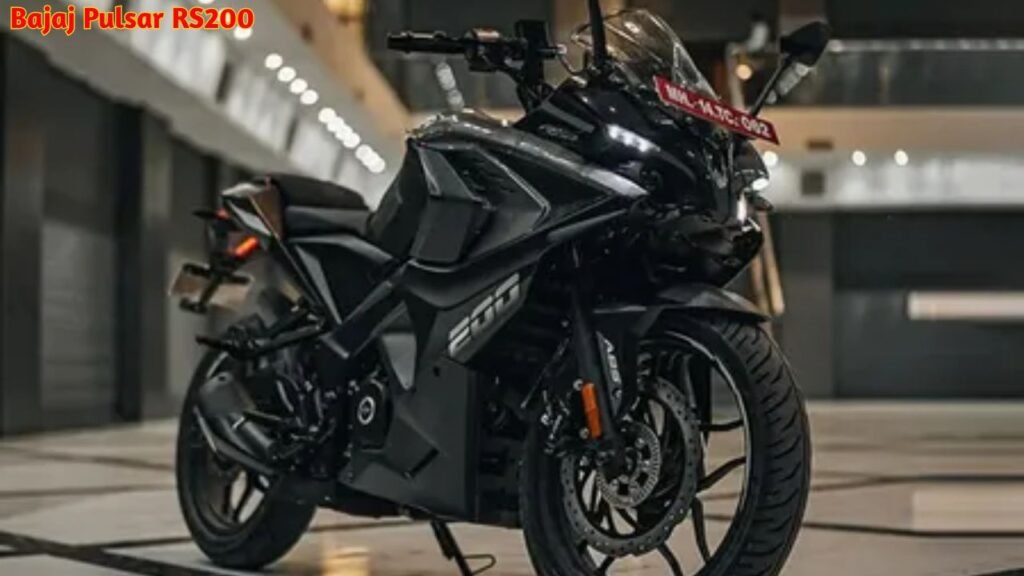
That’s pretty much in line with previous models, so riders don’t have to sacrifice power to get fuel efficiency.The engine is mated to a 6-speed transmission, which enables the rider to have great flexibility to squeeze out fuel economy or performance, depending on your riding style.
The lightweight chassis and sporty riding position are still there to keep the Gixxer feeling nimble and aggressive like a sport bike, but they also provide more than enough comfort for city riding and long rides on the highway. Bajaj seems to have struck a fine balance between a fun to ride machine and a sensible daily commuter.
H2: Solid and Loaded Features
Beyond the normal mechanical updates, the new RS200 will supposedly get a bunch of contemporary “loaded” features. The bike gets its trademark twin-pod projector headlights with LED DRLs that makes the front look very sporty. The instrument cluster is reported to remain semi-digital but Bajaj may have introduced other enhancements to make it more user-friendly and feature-rich, perhaps with new ride modes or a option to a more fuel‑economy‑friendly readout.
Also, the lines are still sharp and aggressive with clip-on bars, split seats and a muscular fairing that speaks of its racing DNA. The quality of construction will also be plenty good, so it will combine performance, comfort and safety in a persuasive pack.
H2: Price Strategy and Market Segment
Among the most interesting features of this launch is the claim of a bargain price. While guessing the exact figures, the ex-sh price for BS6 dual‑channel ABS variant is rumored to be ₹1,44,966 (Delhi) from some sources.If Bajaj is able to keep that price or make it competitive, the RS200 could potentially beat out a lot of competition in the 200cc fully-faired class, just considering its technology.
This tough pricing is in line with Bajaj’s game plan, provide greater safety and more efficiency in a sport bike for first-timers and its other fans. By marketing the RS200 as a value-for-performance bike, Bajaj could also pose a threat to the competition and perhaps convert even buyers who traditionally shy away from performance bikes because of the cost of running them or concerns for their safety.
H2: Implications for Competing Bikes
Should Bajaj’s words translate into truth, the new Pulsar RS200 could make other manufacturers review their play in the segment. Competitor offerings that are performance focused but less fuel efficient or have outdated braking might now seem less appealing. To compete, these makes may have to offer similar mileage-oriented upgrades or safety features like dual-channel ABS.
This is just from the customer’s point of view and could ignite a good war in 200cc faired motorcycles’ segment. Riders who want a safe and efficient performance bike that won’t break the bank are probably going to take notice. The RS200′s unique combination of giving a fuel economy figure of 60 KMPL, having dual‑channel ABS and being sporty might become a yardstick for the bikes in this segment in the future.
H2: Practicality of 60 KMPL
Doubt is natural when the fuel economy figures are too good to be true. Whether the real world riders can squeeze 60 KMPL on this new RS200 only time will tell. In reality, mileage differs greatly with the style of riding, road conditions, traffic, maintenance schedules and even on the quality of fuel. City riding “hard acceleration or braking can decrease this efficiency, highway riding with gentle throttle could bring it to the stated number”.
Still if Bajaj can make the motorcycle to deliver great mileage on road then we are sure that riders will see a significant slash in their fuel expenditure over the months. So the revision is not just for show it might provide real benefits when you use one every day, if the claims prove out in real world testing.
H2: Advantages for Urban and Commuter Riders
For those who commute in crowded cities or Rural urban areas, Sure a sports bike that did 60 KMPL and was safe would be a game changer. Most sporty bikes are shunned for use as daily commuters on account of being fuel-gulpers and expensive to maintain. This refreshed Pulsar RS200 may well turn the tide. Performance bike riders who care about fuel economy may perhaps now have a better reason to choose a model.
Also, the dual‑channel ABS instills confidence in city commute where you tend to break all of a sudden. The extended equipment and praiseworthy design may appeal to the young buyers while the enhanced fuel economy makes it mpg over cost. If someone rides every day, it might very well be a thrilling weekend lark and a practical midweek commuter for him.
H2: Challenges and caveats to watch out for
With all that potential, there are bound to be a few snags. First of all, the figure of 60 KMPL is a claim; One should always take claims with a pinch of salt till the time they are tested by independent testers and real world users. Claims for too good to be true mileage may result in buyer disillusionment if the actual mileage is less. Secondly, such high efficiency may not be achievable with “well known” means of tuning a 200cc liquid cooled engine without sacrificing performance feel, maintenance costs, reliability or a combination of all.
Third, the low price has to be genuine. If the ‘low prices’ label is not forthcoming in the crucial markets or attached to fewer warranty or servicing options, the proposition of value may turn somewhat less solid. Finally, Bajaj will have to produce and supply in good scale, more so if demand explodes. Any delay, or quality compromise, could put a damper on the initial enthusiasm.
H2: What The Launch Holds For Bajaj
In terms of strategy, offering a fuel-efficient, safe and feature-loaded sport bike indicates Bajaj’s desire to bring about innovation not just in power, but also in usable performance. This step may enable Bajaj to widen its performance bike buyers’ circle and target a broad audience including commuter riders, aspiring sport-bike riders and smaller touring bike owners.
By Bajaj setting the benchmark, it could suggest that they want to revive the Pulsar RS for the 2nd/3rd gen Riders and they want to gain major foothold in the Indian 200cc faired segment for Young rider. This could be the start of a new era, if they pull it off, where sport bikes aren’t all about speed, but smart, sustainable performance.
H2: What to Expect for the Release and Availability
Considering the hype for this launch, fans will be eagerly awaiting any official confirmation from Bajaj. The big questions are: Is 60 KMPL mileage real in actual riding condition? Would the dual-channel ABS be available across the dealer network? And will Bajaj support the assertions with warranty, service, and transparent testing protocols on mileage.
Interested parties are likely to watch out for road price, color selections, and whether there are variants (such as ride modes, a digital console or navigation). The early sales will be heavily influenced by the time of launch, production per month and launch offers (if any).